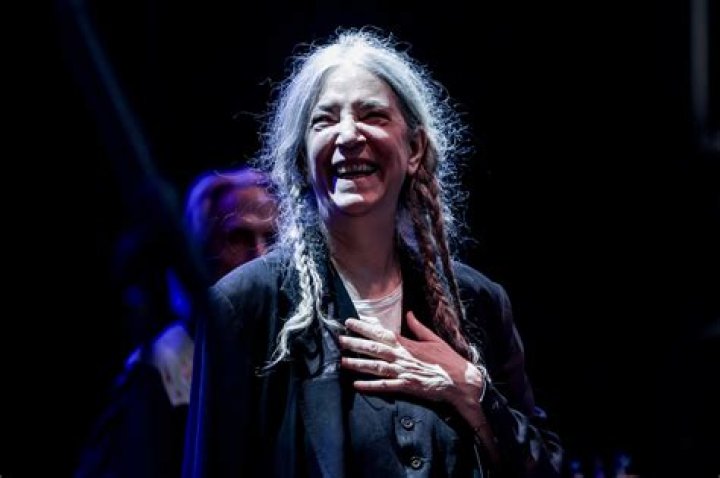
Gabrielle Solti was a Hungarian-born British conductor, widely regarded as one of the greatest conductors of the 20th century. He was known for his passionate and intense interpretations, particularly of the works of Richard Wagner and Gustav Mahler.
Solti was born in Budapest in 1912. He studied piano and conducting at the Franz Liszt Academy of Music, and made his conducting debut in 1930. He quickly rose to prominence, and in 1939 he became the music director of the Budapest Opera. In 1946, he fled Hungary after the Soviet invasion, and settled in England.
Solti became the music director of the Royal Opera House in London in 1961, a position he held for 23 years. During his tenure, he transformed the company into one of the world's leading opera houses. He also conducted many of the world's leading orchestras, including the Vienna Philharmonic, the Berlin Philharmonic, and the Chicago Symphony Orchestra.
Solti made numerous recordings, many of which are considered to be among the greatest classical recordings ever made. He was also a prolific composer, and wrote several operas, symphonies, and other works. He died in London in 1997.
Gabrielle Solti
Gabrielle Solti was a Hungarian-born British conductor, widely regarded as one of the greatest conductors of the 20th century. Here are some key aspects of his life and career:
- Birth: Budapest, Hungary, 1912
- Debut: 1930
- Music director, Budapest Opera: 1939-1946
- Fled Hungary: 1946
- Music director, Royal Opera House, London: 1961-1984
- Recordings: Over 250, including many considered to be among the greatest classical recordings ever made
- Compositions: Several operas, symphonies, and other works
- Death: London, 1997
- Legacy: One of the most influential conductors of the 20th century
- Awards: Grammy Awards, Royal Philharmonic Society Gold Medal, Order of the British Empire
Solti was known for his passionate and intense interpretations, particularly of the works of Richard Wagner and Gustav Mahler. He was also a prolific recording artist, and his recordings are considered to be among the greatest classical recordings ever made. Solti's legacy as a conductor is immense, and he is considered to be one of the most influential conductors of the 20th century.
Birth
Gabrielle Solti was born in Budapest, Hungary, in 1912. This event marked the beginning of a remarkable life and career in music. Solti went on to become one of the most celebrated conductors of the 20th century, renowned for his passionate and intense interpretations, particularly of the works of Richard Wagner and Gustav Mahler.
- Musical heritage: Budapest has a rich musical heritage, and Solti grew up in a musical environment. He began piano lessons at the age of six, and later studied conducting at the Franz Liszt Academy of Music.
- Early influences: Solti was influenced by many great conductors of his time, including Arturo Toscanini and Wilhelm Furtwngler. He also studied the works of the great composers, particularly Wagner and Mahler.
- Early career: Solti made his conducting debut in 1930, and quickly rose to prominence. He became the music director of the Budapest Opera in 1939, a position he held until 1946.
- International recognition: After fleeing Hungary in 1946, Solti settled in England and began his international career. He conducted many of the world's leading orchestras, including the Vienna Philharmonic, the Berlin Philharmonic, and the Chicago Symphony Orchestra.
Solti's birth in Budapest had a profound impact on his life and career. It shaped his musical heritage, influences, and early experiences. These factors contributed to his development as one of the greatest conductors of the 20th century.
Debut
Gabrielle Solti's debut in 1930 marked the beginning of a legendary career in music. Here are some key aspects of his debut and its significance:
- Early promise: Solti's debut at the age of 18 demonstrated his exceptional talent and musical maturity. He quickly gained recognition for his passionate and intense interpretations, which would become his hallmark throughout his career.
- Budapest Opera: Solti's debut took place at the Budapest Opera, where he was appointed assistant conductor in 1930. This position gave him invaluable experience and helped him develop his skills as a conductor.
- Repertoire: Solti's debut program included works by Mozart, Beethoven, and Wagner. This repertoire choice reflects his wide-ranging musical interests and his ability to interpret different styles with equal skill.
- Critical acclaim: Solti's debut was met with critical acclaim, with critics praising his technical brilliance, musical sensitivity, and charisma. This positive reception set the stage for his future success.
Solti's debut in 1930 was a pivotal moment in his career. It marked the beginning of his journey as one of the most celebrated conductors of the 20th century. His early promise, experience at the Budapest Opera, diverse repertoire, and critical acclaim laid the foundation for his future success.
Music director, Budapest Opera
Gabrielle Solti's tenure as music director of the Budapest Opera from 1939 to 1946 was a significant period in his career. Here are some key aspects of this role and its connection to Solti:
- Artistic leadership: As music director, Solti was responsible for the artistic direction of the Budapest Opera. He selected repertoire, conducted performances, and oversaw the musical standards of the company.
- Developing young talent: Solti was committed to developing young talent. He gave opportunities to young singers and conductors, and helped to nurture their careers.
- Innovation and experimentation: Solti was not afraid to innovate and experiment. He introduced new works to the Budapest Opera's repertoire, and he also experimented with different staging and production techniques.
- International recognition: Solti's work at the Budapest Opera brought him international recognition. He was invited to conduct guest performances with major orchestras around the world.
Solti's tenure as music director of the Budapest Opera was a period of great artistic achievement. He helped to raise the company's profile, and he developed a reputation as one of the most exciting and innovative conductors of his generation.
Fled Hungary
Gabrielle Solti's decision to flee Hungary in 1946 was a pivotal moment in his life and career. Here are some key aspects of this event and its significance:
- Political turmoil: Hungary was in a state of political turmoil in the aftermath of World War II. Solti, who was Jewish, felt increasingly threatened by the rise of anti-Semitism and the growing influence of the Soviet Union.
- Artistic suppression: Solti was also concerned about the suppression of artistic freedom in Hungary. The communist government was increasingly dictating what music could be performed and how it could be interpreted.
- International recognition: Solti had already achieved international recognition for his work at the Budapest Opera. He knew that he would have more opportunities to pursue his career outside of Hungary.
- Difficult decision: The decision to flee Hungary was a difficult one for Solti. He was leaving behind his family, friends, and colleagues. However, he ultimately believed that it was the best decision for his future.
Solti's decision to flee Hungary had a profound impact on his life and career. It led him to a new country, a new language, and a new musical environment. However, he never forgot his roots. He remained committed to Hungarian music, and he often returned to Hungary to conduct guest performances.
Music director, Royal Opera House, London
Gabrielle Solti's tenure as music director of the Royal Opera House, London, from 1961 to 1984, was one of the most significant periods in the company's history. Solti was a charismatic and visionary leader who transformed the Royal Opera into one of the world's leading opera houses.
Solti's achievements at the Royal Opera were many. He introduced new works to the company's repertoire, including operas by Richard Strauss, Alban Berg, and Benjamin Britten. He also championed the works of contemporary composers, such as Luciano Berio and Harrison Birtwistle.
Solti was also a brilliant conductor. His performances were known for their intensity, passion, and musicality. He had a deep understanding of the operatic repertoire, and he was able to bring out the best in his singers and orchestra.
Solti's tenure at the Royal Opera was not without its challenges. He was often criticized for his demanding and autocratic style. However, there is no doubt that he was one of the most important figures in the history of opera.
Solti's legacy at the Royal Opera is still felt today. He helped to raise the company's artistic standards to new heights, and he inspired a generation of singers, conductors, and musicians.
Recordings
Gabrielle Solti's discography is a testament to his artistry and dedication to music. He recorded over 250 albums, spanning a wide range of repertoire from Baroque to contemporary. Many of his recordings are considered to be among the greatest classical recordings ever made.
- Technical brilliance: Solti's recordings are renowned for their technical brilliance. He had a keen ear for detail, and he was able to capture the full range of an orchestra's sound. His recordings are also notable for their clarity and balance.
- Musical interpretation: Solti was not only a brilliant technician, but also a gifted musical interpreter. He had a deep understanding of the music he conducted, and he was able to bring out its emotional and dramatic power. His recordings are full of passion and intensity, and they have the power to move listeners.
- Collaboration: Solti was a master collaborator. He worked closely with his orchestras and singers to create recordings that are both musically and technically excellent. He was also open to new ideas, and he was always willing to experiment with different approaches to recording.
- Legacy: Solti's recordings have had a profound impact on the classical music world. They have helped to shape the way we listen to and appreciate music. His recordings continue to be enjoyed by music lovers around the world, and they will undoubtedly continue to be celebrated for generations to come.
Solti's recordings are an essential part of his legacy. They are a testament to his artistry, his dedication to music, and his commitment to excellence.
Compositions
Gabrielle Solti was not only a renowned conductor but also a gifted composer. He wrote several operas, symphonies, and other works that showcase his musical talent and creativity.
Solti's compositions are characterized by their melodic beauty, rhythmic vitality, and emotional depth. His operas, in particular, are known for their dramatic intensity and powerful storytelling. One of his most famous operas is "The Rake's Progress," which is based on the Hogarthian series of the same name. The opera tells the story of a young man's moral decline and eventual madness, and it is considered one of the masterpieces of 20th-century opera.
Solti's symphonies are also highly regarded. His Symphony No. 1, "Symphonic Variations," is a complex and challenging work that explores a wide range of emotions. His Symphony No. 2, "Sinfonia Sacra," is a more meditative and spiritual work, inspired by the writings of Thomas Merton.
Solti's compositions have been performed by leading orchestras and opera companies around the world. His music is admired for its beauty, originality, and emotional power.
In addition to his operas and symphonies, Solti also composed a number of other works, including concertos, chamber music, and songs. His music is a valuable addition to the classical repertoire, and it continues to be enjoyed by music lovers around the world.
Death
The death of Gabrielle Solti in London in 1997 marked the end of an era in classical music. Solti was one of the most celebrated conductors of the 20th century, and his death was a great loss to the music world.
Solti was born in Budapest, Hungary, in 1912. He began his musical studies at the Franz Liszt Academy of Music, and made his conducting debut in 1930. He quickly rose to prominence, and in 1939 he became the music director of the Budapest Opera. In 1946, he fled Hungary after the Soviet invasion, and settled in England.
Solti became the music director of the Royal Opera House in London in 1961, a position he held for 23 years. During his tenure, he transformed the company into one of the world's leading opera houses. He also conducted many of the world's leading orchestras, including the Vienna Philharmonic, the Berlin Philharmonic, and the Chicago Symphony Orchestra.
Solti made numerous recordings, many of which are considered to be among the greatest classical recordings ever made. He was also a prolific composer, and wrote several operas, symphonies, and other works.
Solti died in London in 1997, at the age of 84. He is remembered as one of the most important conductors of the 20th century, and his legacy continues to inspire musicians and music lovers around the world.
Legacy
Gabrielle Solti's legacy as one of the most influential conductors of the 20th century is due to several factors:
- His interpretations of the great classical works were both passionate and insightful. He had a deep understanding of the music he conducted, and he was able to bring out its emotional and dramatic power. His recordings of the works of Beethoven, Wagner, and Mahler are considered to be among the greatest ever made.
- He was a tireless champion of new music. He premiered many works by contemporary composers, including Luciano Berio, Harrison Birtwistle, and Peter Maxwell Davies. He also conducted the first performances of several operas by Richard Strauss, including "Elektra" and "Salome."
- He mentored a generation of young musicians. Many of the world's leading conductors today studied with Solti, including Daniel Barenboim, Zubin Mehta, and Simon Rattle. He was a demanding teacher, but he was also a generous one, and he always had time for his students.
Solti's legacy is not just about his musical achievements. He was also a man of great integrity and character. He was a strong advocate for freedom of speech and artistic expression, and he spoke out against injustice and oppression. He was a true citizen of the world, and he used his music to bring people together.
Solti's legacy is one that will continue to inspire musicians and music lovers for generations to come. He was a giant of the 20th century, and his music will continue to be enjoyed and celebrated for many years to come.
Awards
The numerous awards received by Gabrielle Solti, including Grammy Awards, the Royal Philharmonic Society Gold Medal, and the Order of the British Empire, are a testament to hisas a conductor. These awards not only recognize his musical talent and skill but also highlight the significant contributions he made to the world of classical music.
Solti's Grammy Awards, which number nine in total, span multiple decades and categories, including Best Orchestral Performance and Best Opera Recording. These awards showcase the breadth of his repertoire and his ability to interpret and conduct a wide range of musical styles with equal mastery. The Royal Philharmonic Society Gold Medal, one of the most prestigious awards in the classical music world, was bestowed upon Solti in 1971 in recognition of his outstanding contribution to British musical life. He was the first conductor to receive this award twice, the second time coming in 1987.
In 1972, Solti was appointed a Knight Commander of the Order of the British Empire (KBE) by Queen Elizabeth II for his services to music. This honor is a reflection of the high esteem in which Solti was held not only within the music community but also by the British public. Solti's awards are not only a source of pride for him and his family but also for the institutions and organizations with which he was associated throughout his career. They serve as a lasting legacy of his dedication to musical excellence, his commitment to promoting classical music, and his profound impact on the cultural landscape of the 20th century.
FAQs about Gabrielle Solti
Gabrielle Solti was one of the most celebrated conductors of the 20th century. He was known for his passionate and intense interpretations, particularly of the works of Richard Wagner and Gustav Mahler. Solti made numerous recordings, many of which are considered to be among the greatest classical recordings ever made. He was also a prolific composer, and wrote several operas, symphonies, and other works.
Question 1: What was Solti's nationality?
Answer: Solti was born in Hungary, but he became a British citizen in 1972.
Question 2: What orchestra did Solti conduct for the longest period of time?
Answer: Solti was the music director of the Royal Opera House in London for 23 years, from 1961 to 1984.
Question 3: What are some of Solti's most famous recordings?
Answer: Solti's recordings of Beethoven's symphonies, Wagner's operas, and Mahler's symphonies are among his most famous and highly regarded.
Question 4: What composers did Solti champion?
Answer: Solti was a champion of contemporary composers, including Luciano Berio, Harrison Birtwistle, and Peter Maxwell Davies. He also premiered several operas by Richard Strauss, including "Elektra" and "Salome."
Question 5: What awards did Solti receive?
Answer: Solti received numerous awards, including nine Grammy Awards, the Royal Philharmonic Society Gold Medal, and the Order of the British Empire.
Question 6: What is Solti's legacy?
Answer: Solti is remembered as one of the most important conductors of the 20th century. He was a passionate and insightful interpreter of the great classical works, a champion of new music, and a mentor to a generation of young musicians.
Solti's legacy is one that will continue to inspire musicians and music lovers for generations to come. He was a giant of the 20th century, and his music will continue to be enjoyed and celebrated for many years to come.
Tips from Gabrielle Solti
As one of the most celebrated conductors of the 20th century, Gabrielle Solti left behind a legacy of musical excellence and invaluable insights for musicians and music lovers alike. Here are some key tips attributed to Solti:
Tip 1: Embrace the power of music. Solti believed that music has the ability to transcend language and cultural barriers, bringing people together and fostering a sense of unity.
Tip 2: Study the score thoroughly. Solti emphasized the importance of meticulous score study, encouraging conductors to delve deeply into the composer's intentions and the intricacies of the music.
Tip 3: Rehearse relentlessly. Solti stressed the value of rigorous rehearsal, stating that it is through repeated practice that musicians can achieve precision, ensemble, and a deep understanding of the work.
Tip 4: Be willing to experiment. While respecting the composer's intentions, Solti encouraged conductors to explore different interpretations and bring their own unique perspectives to the music.
Tip 5: Foster a positive and collaborative environment. Solti believed that a conductor's role extends beyond leading the orchestra; it also involves creating a supportive and inspiring atmosphere for musicians to thrive.
Tip 6: Nurture young talent. Solti was passionate about mentoring young musicians, recognizing their potential and providing them with opportunities to develop their skills.
Tip 7: Seek out the best in every musician. Solti had a remarkable ability to draw out the best in each musician, believing that every performer has something unique to contribute to the collective sound.
Tip 8: Strive for excellence in all endeavors. Solti set high standards for himself and those around him, constantly pushing the boundaries of musical excellence and inspiring others to do the same.
These tips, gleaned from Solti's vast experience and wisdom, serve as valuable guidance for musicians and music enthusiasts seeking to deepen their understanding and appreciation of the art form.
By embracing these principles, we can honor Solti's legacy and continue to experience the transformative power of music in our own lives and communities.
Conclusion
Gabrielle Solti's legacy as one of the greatest conductors of the 20th century is secure. His passionate and insightful interpretations, tireless advocacy for new music, and unwavering commitment to musical excellence have left an indelible mark on the world of classical music. Solti's recordings continue to be celebrated for their technical brilliance, emotional depth, and enduring power.
As we reflect on Solti's life and career, we are reminded of the transformative power of music to inspire, unite, and transcend boundaries. Solti's legacy serves as a beacon, guiding us to embrace the beauty and profound impact that music can have on our lives. By cherishing his recordings, studying his interpretations, and honoring his principles, we can continue to experience the joy and enrichment that Solti brought to the world through his extraordinary gift for music.